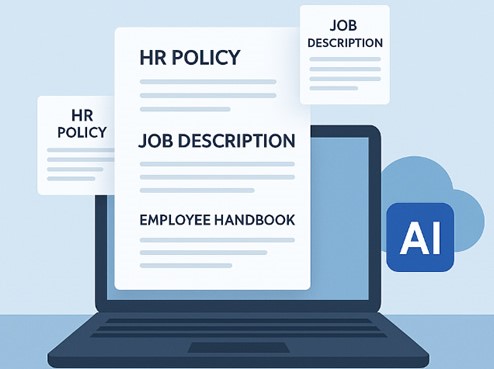


As the normal practice in most organizations, the employment contract is generated in one tool, and the signature is collected through a separate e-sign platform. The signed PDF is sent by email. Someone downloads it, renames it, and uploads it to the shared folder where employee files are stored.
Such a process is not a workflow. It is a sequence of manual handoffs held together by individual departments, and individual departments are exactly what fail under the pressure as the organization grows.
According to 2025 adoption research, 60 to 80 percent of organizations have now adopted some level of e-signature technology, but adoption alone has not solved the problem. The gap between having an e-signature tool and having an integrated native electronic signature workflow built into the document lifecycle is where most HR teams’ paper trails fail.
This article covers what reliable HR document storage software with native e-signature actually means, how the leading platforms handle the integration, and what to look for when the integrity of the employment record is non-negotiable.
Why “Native” Is the Critical Word
Not all e-signature integrations are equal. The difference between a native electronic signature workflow and a bolted-on one determines whether your document record i
A native integration means the signature workflow lives inside the same system that generates, stores, and links the document to the employee record, end to end, without manual steps between them. The document is generated, routed for signature, signed, and filed in a single unbroken sequence. The signed version lands in the right employee profile automatically. The audit trail is complete because nothing left the system at any point.
A non-native integration means the document exits the generation system, enters a separate signing platform, and returns as an email attachment that needs to be manually handled before it becomes part of the employment record. Each of those manual steps can result in something being missed, misfiled, delayed, or lost.
For HR teams where the completeness of the document record has legal and operational importance, it is the difference between a paper trail that is reliably complete and one that depends on someone remembering to close the loop.
What the Legal Framework Actually Requires
There are many HR platforms that perform such services; however, before examining platforms, it is important to understand what makes an electronically signed employment document legally binding.
In the United States, the ESIGN Act and UETA recognize digital signatures as equivalent to wet-ink signatures for enforceable agreements, including employment contracts, provided the signatures meet specific evidentiary standards. If you can prove the person intended to sign, the document has not been altered, and you have a complete record of the transaction, you have a legally binding signature.
Those three requirements, intent, integrity, and a complete transaction record, can translate directly into platform requirements. The signing platform needs to capture demonstrated intent. It needs to ensure document integrity, and it needs to produce a complete audit trail that records when the document was sent, opened, viewed, and signed.
A secure electronic signature platform encrypts documents, protects them in transit and at rest, and limits access to authorized users. What differentiates platforms in the HR context is whether the audit trail and signed document are automatically linked to the employee record or whether that connection requires manual action after the fact.
The Document Lifecycle Problem Most Platforms Ignore
The e-signature platforms that dominate the general market, including DocuSign, Adobe Acrobat Sign, and HelloSign, are built primarily around the signing transaction itself. They handle signature collection reliably and produce legally sound audit trails. What they do not do is generate the employment document in the first place, check it for compliance before it goes out, or file the signed result into an employee-linked record automatically.
This means that for HR teams relying on general e-signature platforms, the workflow has gaps at both ends.
HR document management software is a secure, cloud-based system that controls the entire lifecycle of employee files, from capture and indexing through access, retention, and audit. The key word is lifecycle. A platform that handles only the signature step does not manage the lifecycle. It handles one transaction within it.
For HR document storage software to be reliable, it needs to manage the complete sequence, structured document generation, compliance review before issuance, native electronic signature with legally compliant audit trail, automatic filing to the employee record, and retrievable version history.
How the Leading Platforms Compare
DocuSign
DocuSign is the most popular e-signature platform and for standalone signature collection it is the most established option available. Its audit trail is robust, its legal compliance across jurisdictions is well-documented, and its brand recognition means most signatories encounter it without friction.
As HR document storage software, DocuSign is limited. It is a signing and tracking platform, not a document generation or storage system. Documents need to be created elsewhere, uploaded for signing, and stored elsewhere after signing. This means the HR team using the platform still needs a separate system for document generation, a separate system for the employment record, and a manual process connecting them. For organizations with the capacity to manage those handoffs reliably, DocuSign is their best option. For teams where the handoffs themselves are the problem, it does not solve them.
Pricing starts at $15/user/month for the Personal plan, scaling to $45/user/month and above for business tiers with team features.
Best for: Organizations that already have strong document generation and storage infrastructure and need a reliable signing layer.
Adobe Acrobat Sign
Adobe Acrobat Sign is built for organizations that handle heavy document workflows, making it ideal for legal, HR, and operations teams. It offers workflow automations, automated reminders, approvals, and document routing across teams.
Adobe’s strength in this space is the depth of its PDF workflow integration. Organizations that use PDF-based document processes find that Acrobat Sign is the best tool for their operation. The e-signature is legally compliant, the audit trail is complete, and the integration with Microsoft 365 makes it accessible in environments where documents are produced in Word.
However, the platform faces the same limitation as DocuSign. Acrobat Sign is a signing and workflow tool, not an HR document generation or storage system. It does not produce employment documents from guided inputs, apply jurisdiction-specific compliance checks, or maintain employee-linked records. Those capabilities still require a separate system. Acrobat Standard pricing starts at $14.99/user/month and Acrobat Pro at $23.99/user/month, with enterprise pricing above that.
Best for: Organizations producing high volumes of PDF-based documents across multiple department and needing signing automation with strong Microsoft and Adobe ecosystem integration.
PandaDoc
PandaDoc offers document creation, signature collection, and basic tracking in one interface. They handle end-to-end workflow better than standalone e-sign tools and are particularly strong for sales and contract use cases.
For HR-specific document management, PandaDoc is a partial fit. Template-based document creation with signing built in removes some of the manual work in the general signing workflow. However, PandaDoc is not built around the HR employment document lifecycle; it does not apply HR-specific compliance checks, does not maintain employee-linked records natively, and is not structured around the document types such as warning letters, PIPs, employment contracts, and employee handbooks that define HR compliance requirements. It is a strong general document workflow tool applied to HR use cases, rather than an HR-first platform.
Pricing starts at around $19/user/month for the Starter plan, scaling to $49/user/month for the Business tier with richer automation features.
Best for: Companies that want combined document creation and signing in one tool and whose HR document needs are offer letters and contracts rather than the full employment documentation lifecycle.
HR Docket
HR Docket is the platform in this comparison built around a complete HR employment document lifecycle. It is not signing transactions adapted for HR use, but HR documentation is the core workflow, with a native electronic signature built into every step of it.
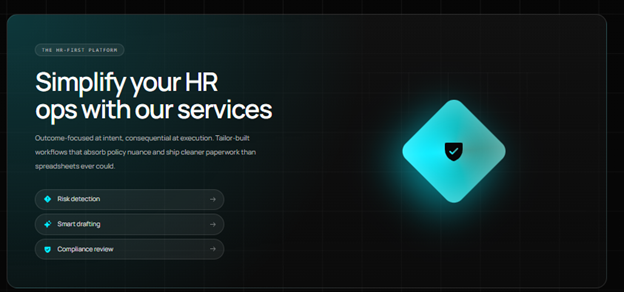
HR docket workflow fellows a structured guided input that captures the required document details, including role, compensation, jurisdiction, effective dates, and relevant policy references. They generate a complete, role-specific first draft. The built-in risk review checks every draft for unclear clauses, missing fields, inconsistent terms, and jurisdiction gaps before anything is shared. The export-ready document routes directly to the recipient for e-signature and is collected natively within the platform, not via a separate signing service. The signed version files automatically to the employee’s linked record, timestamped and retrievable without manual intervention.
That sequence covers the full lifecycle: generation, compliance review, signing, and storage .
The e-signature is audit-grade, that is, tracked delivery, timestamped signing action, identity-linked record, and sealed after signing. The complete audit trail , that is , what was sent, when it was opened, when it was signed, and what version was executed is stored in the employee record alongside every other document in the employment history.
HR Docket covers the full employment document suite including employment contracts, offer letters, warning letters, PIPs, NDAs, resignation acceptances, promotion letters, employee handbooks, and onboarding documents. Every one of them moves through the same guided generation, risk review, native signing, and automatic filing sequence.
Pricing for the Growth plan covering teams of up to 50 employees is $49/month flat, making the cost per document s lower than per-user signing platforms at comparable team sizes.
Best for: HR teams and small businesses where the completeness and retrievability of the employment document record is the primary requirement, and where the integrity of that record needs to be maintained without depending on manual handoffs between separate systems.
Feature Comparison at for leading Platforms
| Feature | DocuSign | Adobe Acrobat Sign | PandaDoc | HR Docket |
| Native HR document generation | No | No | Partial | Yes |
| Guided structured inputs | No | No | Template-based | Yes |
| Built-in compliance review before sending | No | No | No | Yes |
| Jurisdiction-specific checks | No | No | No | Yes, US/UK/local |
| Native e-signature (no third-party) | Yes | Yes | Yes | Yes |
| Audit-grade signing trail | Yes | Yes | Yes | Yes |
| Auto-filing to employee record | No | No | No | Yes |
| Full HR document suite coverage | No | No | Partial | Yes |
| Pricing from (small team | $15/user/mo | $14/user/mo | $19/user/mo | $49/mo flat |
What “Reliable” means in this context
The word “reliable” in the context of HR document storage software with a native electronic signature workflow has a specific meaning.
Reliability means when a document needs to be produced, it is complete. When a signature needs to be collected, it happens in the same system. When a dispute arises, the record is there, complete, linked, and retrievable without reconstruction.
HR teams sit at the center of every employee journey. From the first offer letter to final exit paperwork, HR manages documents that are legally binding, time-sensitive, and deeply personal. The reliability of the system managing those documents determines whether the organization can defend its processes when they are tested.
That defense depends on a complete, unbroken chain, that is, the document was generated correctly, reviewed before issuance, signed with a legally valid and tracked signature, and filed to the right record automatically. A system that handles three of those four steps and leaves one to manual process is not a reliable system.
Every document becomes part of the employee’s permanent record
Spend less time buried in HR paperwork and more time growing your business. Generate documents, organize employee records, and simplify HR operations; all from one place.
No credit card required · Cancel anytime · Set up in under 5 minutes
Summary
The most reliable HR document storage software is not the one with the most features. It is the one that manages the complete document lifecycle, generation, compliance review, signing, and filing in a single unbroken workflow, with no manual assistance that creates gaps in the record.
General e-signature platforms handle the signing transaction reliably well. They do not handle the document before the signature or the record after it. For HR teams where the completeness of the employment document record is non-negotiable, that gap matters.
A native electronicsignature workflow built into the document generation and storage system that is not integrated from a third party and not dependent on manual filing after signing is what makes the difference between a paper trail that holds up when it is tested and one that requires reconstruction to explain.