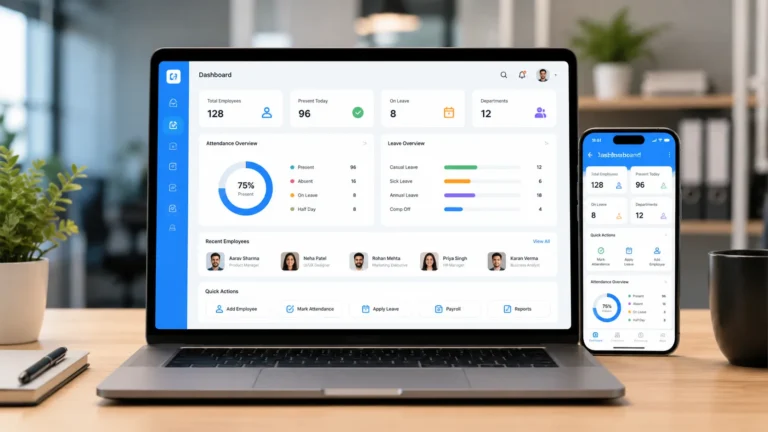


Being tasked by your employer to build or write an employee handbook is not an easy assignment because it time consuming and sometimes feels like a homework. Yet a handbook is one of the first thing you give to a new hire to read. The employee handbook contains everything the new hire need to know about the business including core values, mission and vision statement and the dos and don’ts s of the organization.
The good news is you no longer have to write it from a blank page. A compliant employee handbook builder can help you through the process. All that is required of you is to spend a few minutes to fill in the policies, your location requires, and keep the document current as laws change. The hard part is knowing which HR employee handbook builder to use.
The right software tools allow HR professionals and small business owners to generate, publish, update, and audit state-compliant handbooks in minutes.
This article walks you through what these builders do, what separates the good ones from the others, and how to pick the right one for your business.
What Is a Compliant Employee Handbook Builder?
An employee handbook builder is software that helps you create, publish, and maintain your company’s policies in one document. A compliant handbook does more than that, it make sure that the document generated align to the labor and employment laws of the jurisdiction your business operates, where your employees work and the size of your company.
Instead of handing you a generic template, a good HR handbook builder asks for your inputs. Where are your employees located? The work schedule of your workers? Are you hiring remotely? After you have inputted important policies about your business, the builder goes head to generate a jurisdiction-based, legal sound, and complaint Handbook devoid of errors and mistakes.
Most modern builders also handle the complex part of the process in building an employee handbook such as:
- Collecting physical employee acknowledgments so you have proof they received the handbook
- Tracking versions of handbook so you know what policy applied on a given date
- Sending update notifications when you change something
- Letting you add your own culture, values, and tone alongside the legal basics
That is what a modern employee handbook builder will do for you if you choose the right one. Saving you the stress of flipping through pages and old documents.
Why a Compliant Handbook is Important
A handbook is not just one of the onboarding documents you give you a hire but it contains what your business stand for and can save you in the future when disputes arise.
It sets clear expectations. When an employee knows the rules on when to report to work, end work, what is expected of him, and what he is not prohibited to do, there is less room for confusion and mistakes.
It supports fair and consistent treatment. Applying written company policies the same way to everyone is one of the best ways to show you treat people equal respective of their position, title or rank within the organizational structure.
It can help you in a dispute. An updated handbook, along with signed acknowledgments, gives you documentation if an employee suspended or fired for abusing company policy decide to seek legal redress. An outdated handbook hardly stands the test of time and sometimes difficulty to defendable in court.
It helps you meet legal requirements. Many jurisdictions require strict company policies or notices on matters such as harassment, leave, and workplace safety in your employee handbook and must be current and updated to current laws. Missing them can lead to penalties or huge legal problems.
It makes onboarding smoother. New hires get answers on day one, which means fewer repetitive questions for managers and errors on their first week on the job.
A handbook with outdated or incorrect policies can be worse than having none at all, because it sets promises or rules that no longer match the law or your current workplace practice. That is the reason why “compliant” is the word that matters most.
What are the Factors to Consider when selecting a Compliant Employee Handbook Builder
Not every tool that advertised as handbook builder meet all the requirement for a complaint handbook builder. Use this checklist when you compare options.
State and local coverage
Employment and rules differ by state, province, and even city. Check whether the builder supports the specific locations where your people work, and whether it adds required policies for each. If you have remote employees in several places, this is a must have checklist.
Regular legal updates
Labor laws change regularly especially when it comes to minimum wage and conditions of service. The best tools monitor changes and update their policy language, then notify you so you can review and republish. Check how frequently updates happen and who reviews them.
Easy to Customize to meet Organization Culture
A good builder lets you edit freely while warning you if a change could conflict with a legal requirement. It allows you add company culture, core values, mission and vison statement.
Clear with no Jargons
A handbook full of legal jargon helps no one but cost you more to hire a lawyer to interpreted . Look for templates written so a new employee can actually understand them, because a policy people cannot understand is hard to enforce.
Acknowledgment tracking
Being able to show who has read and signed each version is extremely useful. Look for e-signature, reminders, and reporting.
Easy publishing and access
Your team should be able to find the handbook easily, either on desktop and mobile. Some tools publish it as a searchable web page or app instead of a PDF.
Integrations
If the builder connects with your HR, payroll, or onboarding software, you save time and avoid duplicate work.
Pricing and transparency
Some builders are free with a payroll subscription, some are standalone, and others are part of larger HR suites. Compare total cost, including per-employee fees and any extras for legal review.
Best Compliant Employee Handbook Builder in 2026
Based on our research, customer review of various platforms, here are the top five complaint employee handbook builders:
1.BambooHR
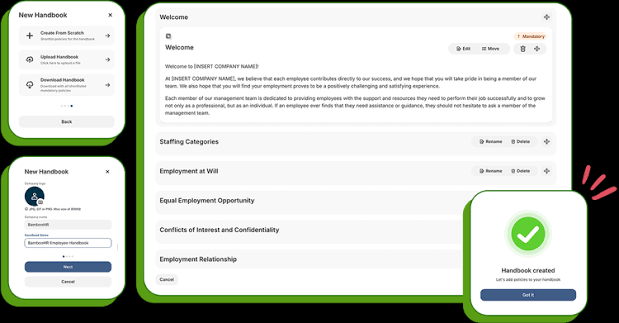
BambooHR is a popular HR platform with tools for storing policies, sending documents for signature, and tracking acknowledgments. It works well for small and mid-sized businesses that want a friendly HR system with policy management built in
Pros
- It has handbook management with onboarding, time-off tracking, performance reviews, and employee records.
- It has an intuitive user interface for employees and administrators.
- Automated onboarding workflows push handbooks directly to new hires.
Cons
- Primary compliance intelligence features are heavily tailored to the US market.
- Advanced compliance and performance modules carry additional, making it expensive for small and growing businesses.
2. HRDocket
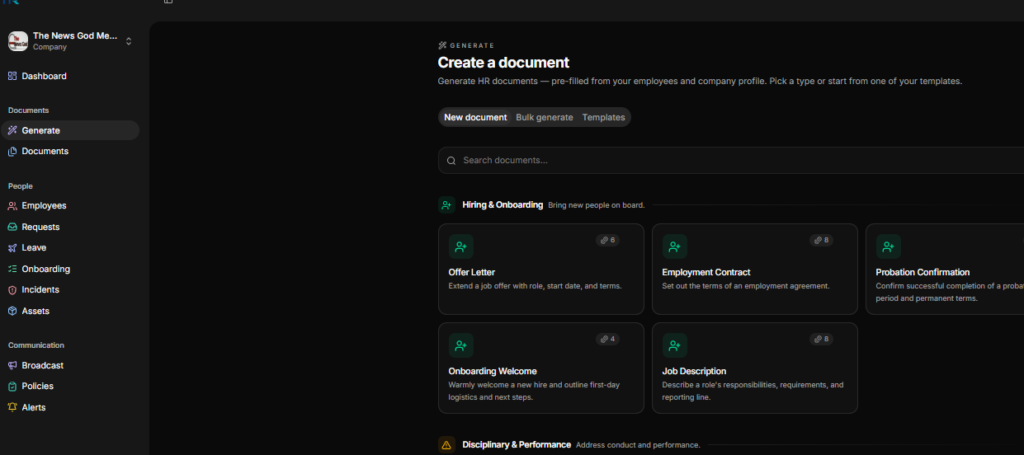
HRDocket is an AI-powered HR document generation and workflow platform built to help business owners, HR managers, and startup founders produce legally sound, region-specific documentation without incurring legal fees. Its handbook builder uses a guided input where users select their country and state/region first (e.g., United States – California, Canada – Alberta). HRDocket then uses the information inputted to draft contract terms, statutory leave entitlements, anti-harassment mandates, and separation rules to match local labor requirements.
Pros
- Designed and built for easy and less-time consuming document generation and workflow administration.
- Eliminates the need to draft complex policy language from scratch.
- Combines handbook building with daily HR tools like asset tracking and incident documentation.
- It a freemium tool and affordable for growing businesses.
Cons
- Focuses on documentation and workflows rather than full-suite payroll processing.
- It relies on guided input to draft full compliance documents.
3. Trainual
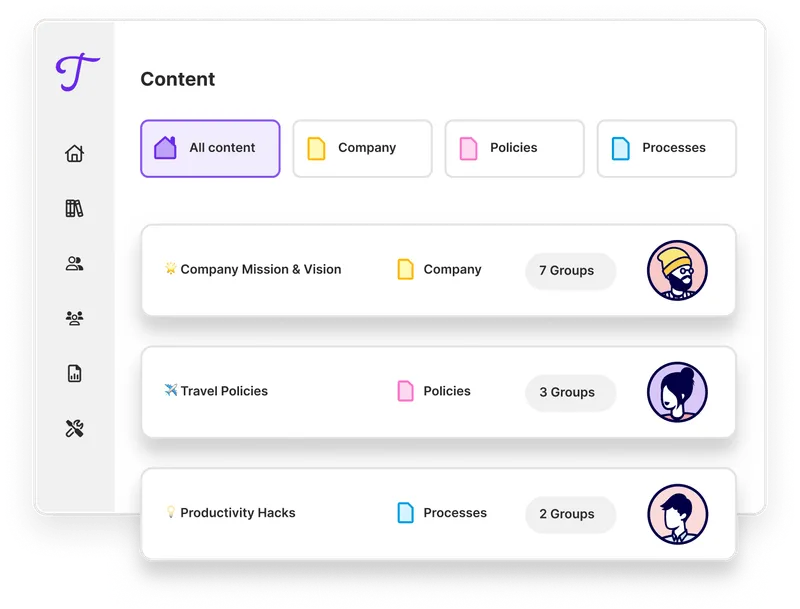
Trainual treats the employee handbook as a living and interactive training system but not a policy document. Rather than having employees sign off on a static PDF, Trainual breaks policies down into bite-sized learning tracks, interactive quizzes, and role-based training modules. It is an ideal platform for businesses looking to blend standard handbook acknowledgments with Standard Operating Procedures (SOPs) and job-specific training.
Pros
- Connects policy acknowledgments directly to daily employee training and SOPs.
- High engagement through multimedia support (video, loom links, text, and GIFs).
- Prevents “click-through sign-offs” by embedding comprehension quizzes.
Cons
- Requires manual setup for legal compliance updates compared to dedicated legal handbook engines.
- Subscription pricing increase with headcount and can become expensive for smaller teams
4. AirMason
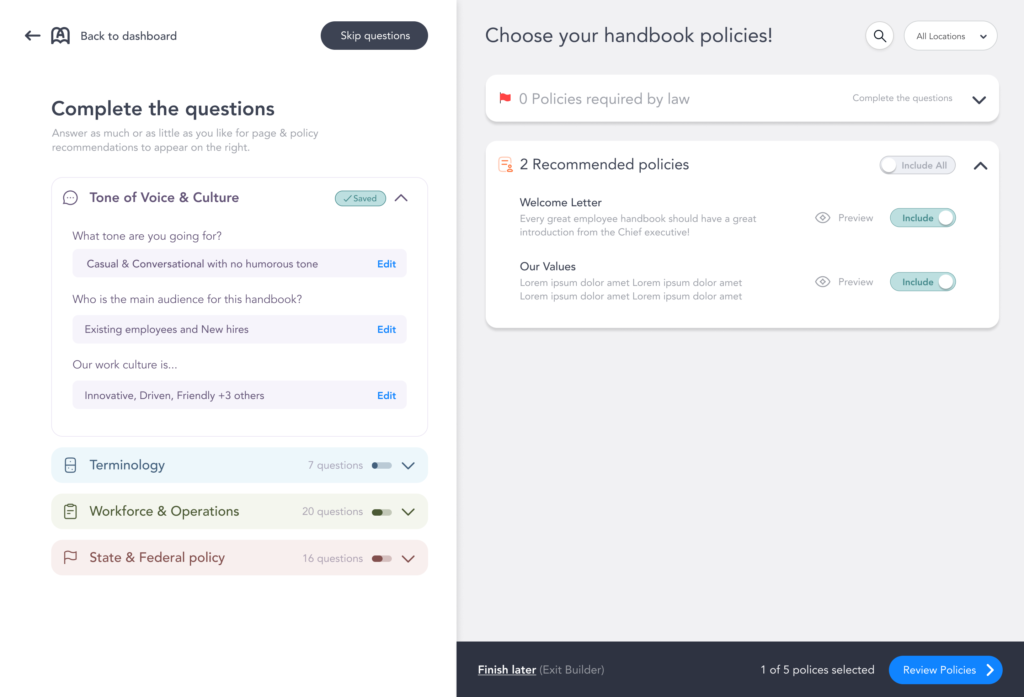
AirMason approaches handbook building from an employer branding and engagement angle. The platform is designed to replace dry text PDFs with graphics and interactive web-based handbooks, AirMason combines drag-and-drop design tools with an AI-powered compliance engine. It automatically redesigns your company website to import brand fonts, colors, and logos, allowing HR teams to embed photos, videos, and culture pages directly alongside legal policies.
Pros
- Produces visually superior, highly engaging digital handbooks that boost employee reading rates.
- Deep compliance tracking that extends to city or county labor laws.
- AirAssist AI handles repetitive employee policy questions automatically.
Cons
- Quote-based pricing is higher than basic document generators, making it expensive for small businesses
- Focuses strictly on handbooks and policies rather than generating other HR contracts like offer letters or warning letters.
5. SHRM Employee Handbook Builder
The platformbacked by the Society for Human Resource Management, the SHRM Employee Handbook Builder (EHB) is a trusted, web-based subscription tool for US employers. It has a built-in partnership with national labor law firm Jackson Lewis P.C., SHRM’s builder provides a simple interview-style questionnaire that automatically selects required federal and state policies based on your employee headcount and operational workflow.
Pros
- Unmatched compliance credibility through Jackson Lewis P.C. legal backing.
- Affordable annual flat-rate subscription ($499/year for all 50 states).
- Clear legal prompts for headcount-triggered requirements like FMLA and state disability leaves.
Cons:
- Provides basic document formatting without modern visual design
- Subscriptions are restricted to a single legal entity per license, which mean multi-entity groups require multiple purchases.
- Does not allow uploading outside legacy text into its legal engine.
Frequently Asked Questions
What is a compliant employee handbook builder?
It is software that helps you create an employee handbook that aligns to the laws that apply to your business, usually based on your location and size, and helps you keep it updated over time.
Do small businesses need an employee handbook?
Yes, Small business needs an employee handbook. However, in many places a handbook is not strictly required by law, but certain policies and notices often are. Even a small business benefits from an employee handbook because it reduces confusion and helps you treat people consistently.
Can HR Handbook builder software make sure my handbook is legally compliant?
Not completely but a good software greatly reduces the risk of missing required policies and keeps language updated but it cannot guarantee compliance in every situation.
How often should I update my employee handbook?
Review it at least twice a year, and update it whenever laws change, you add new locations, or your practices shift. Make sure employees acknowledge each new version.
How much does a handbook builder cost?
Prices differentiate depending on the tool use are using. Some are included with payroll or HR subscriptions, while standalone tools charge monthly or annual fees, sometimes per employee.
Is a free handbook template enough?
A free template is a reasonable starting point, but it is usually generic and may not reflect the laws where you operate. Use it only as a draft and have it reviewed, or choose a builder that is aligned with your policies of your business location.
Conclusion
There are various HR handbook builders’ platforms and software available but based on research and practical use of various platforms, the five listed and explained above are the best in the market now based on their features. Prices, usage and setup.
The best compliant employee handbook builder is the one that fits the way you work and covers the places you operate. The platforms or software stays current as laws change, and lets you add your own inputs. Start by mapping your locations and team, try two or three tools with real scenarios, and bring in a professional to review the final result.
Do that, and your handbook becomes more than a legal safety net. It becomes a clear, friendly guide that helps every new hire feel at home from day one.