

If you have ever hired someone in a new state or country and then in three weeks later you discovered that you missed a mandatory leave policy or a required contract clause, you already know why this topic is important in modern HR discussions.
Employment and labor laws are not universal. A termination notice that is perfectly fine in Texas can be unlawful in Germany. Overtime calculations in California looks nothing like overtime calculations in Ghana. And the paperwork required in one province may not even exist in the next.
That is the gap problem jurisdiction-aware HR software is built to resolve. In this write up, we will walk through what the term really means, what to look for, which platforms are worth a serious look, and how to avoid the mistakes that companies the most.
What Is Jurisdiction-Aware HR Software?
Jurisdiction-aware HR software is a human resources platform that adjusts its workflows, documents, calculations, and compliance checks based on where an employee works.
In practice, that means the system is designed to knows things like:
- Which minimum wage, overtime, and working-hours rules apply to a given location
- What statutory leave an employee is entitled to and how it accrues
- Which contract terms, notice periods, and probation limits are legal
- How payroll taxes, social contributions, and benefits should be calculated
- Which local filings, reports, and deadlines apply
A generic HR tool treats every employee the same and leaves you to figure out the rest. A jurisdiction-aware platform incorporates local rules into the product.
Why It Matters More Than Ever
Since Covid-19 broke out, remote working has now become a norm rather than exception. A small startup can now have employees in six countries, and a growing business can end up with staff in several states with different rules.
Three things make this risky:
- Rules change constantly. Minimum wages, paid leave laws, and pay transparency requirements are updated all the time and updating them manually can cause a problem.
- Penalties are real. Misclassifying a worker, missing a statutory benefit, or underpaying overtime can result in paying fines, legal fees and penalties.
- Trust is on the line. When an employee notice payslip is wrong or leave balances do not match local law it can demoralized the worker reduce his output.
A Good HR software does not replace legal advice, but it reduce the mistake and the risk you may incur while running your business.
What to Look for Before You Buy an HR Software
Before comparing brand names, let explain to you the features that separate a truly jurisdiction-aware platform from one that just advertises “global” on its homepage.
Depth of local coverage
Check which countries and states are supported and the scope of the coverage. Some vendors cover payroll in a country but not local contracts or benefits. Ask for specifics, not broad coverage.
Automatic rule updates
The platform should update local rules itself and tell you when something changes either via email or SMS or notification on the platform. If you are expected to monitor legislation manually, it is not doing its job.
Localized contracts and documents
Look for compliant employment agreements, policy templates, and onboarding documents generated for each location.
Payroll and tax accuracy
Payroll is where most mistakes happen. Confirm whether the vendor runs payroll through its own local entities, trusted in-country partners, or leaves it to you.
Support from real local experts
Software is only half the story. The best vendors back it up with in-country specialists you can actually talk to when something unusual comes up.
Integrations and reporting
Your HR platform should connect with your accounting, time tracking, and benefits tools, and give you reporting that spans all locations in one view.
Pricing that makes sense
Watch for per-employee fees, setup costs, and extra charges for each new country. Always ask for a full quote based on your actual headcount and locations.
The Best Jurisdiction-Aware HR Software to Consider
No single platform is best for everyone. The right pick depends on whether you are hiring internationally or locally. Here is best shortlisted jurisdiction- aware HR software for 2026.
1. HRDocket
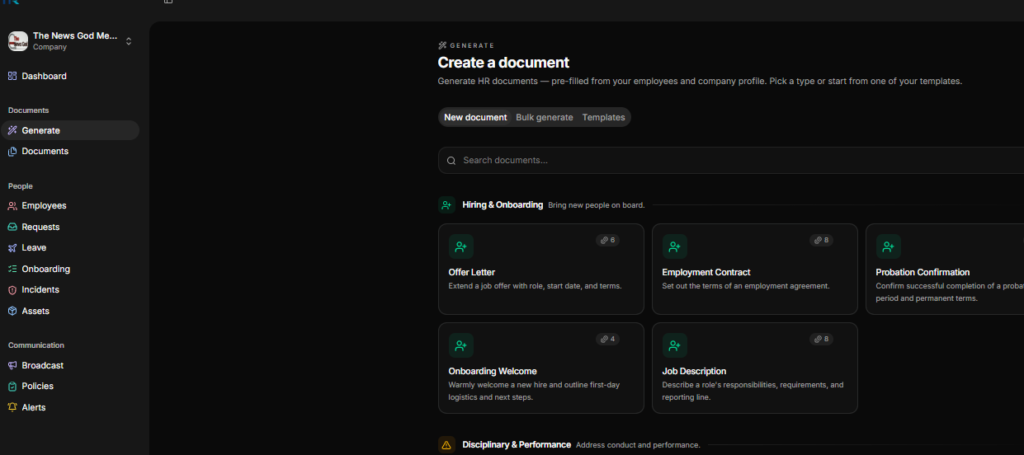
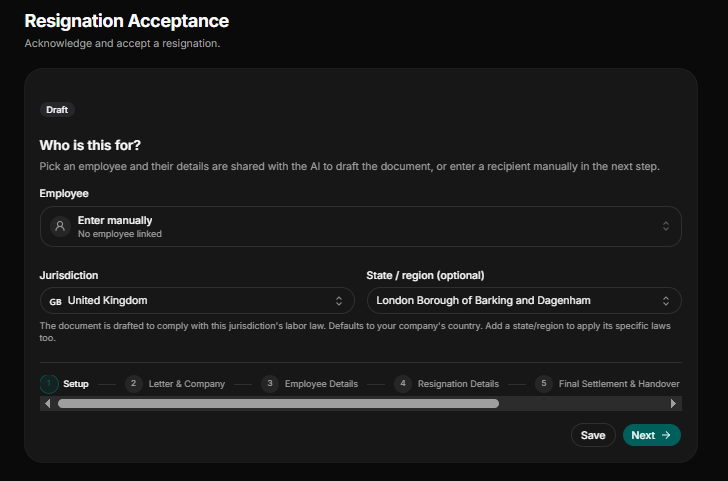
HRDocket is an AI-powered HR document generation and workflow platform designed to help small and medium business owners and HR teams generate legally sound, region-specific documentation without hiring expensive legal counsel. By selecting a jurisdiction upfront (e.g., US–California, Canada–Alberta, or UK), HRDocket automatically tunes the underlying contract language, statutory leave rules, and policy covenants to match local labor laws.
Pros
- It has an in-built jurisdiction engine that automatically adjust your document to the employment and labor laws based on the selected region.
- It generates and produces more than 21 types of HR documents including handbooks, offer letters, probation confirmations, incident reports, and NDAs.
- AI compliance checks and expiration alerts
- Digital signatures and an employee self-service portal.
- HRDocket is a freemium platform with paid plans starting at $19 a month
Cons
- It is a document and records tool, not a full HRIS
- The structured workflows require sticking to guided steps to ensure full compliance
- The free plan covers one employee profile and about 5 documents. The $19 Starter plan covers up to 15 employees and roughly 15 documents a month.
2. Deel
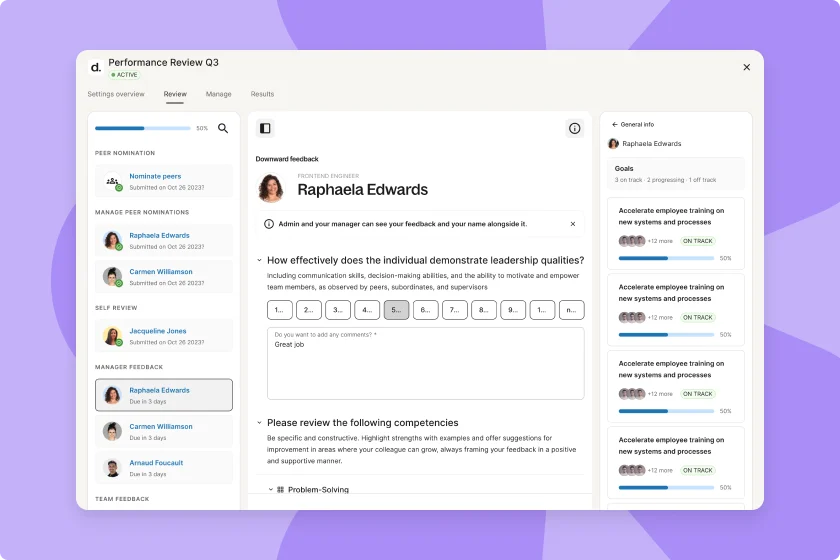
Deel is a popular choice for companies hiring contractors and employees across many countries. It combines compliant contracts, global payroll, and an employer-of-record service, so you can hire in places where you have no office. It is a strong fit for fast-growing remote teams that want one platform for multiple employees.
Pros
- Handles local tax filings, statutory benefits, and localized employment contracts worldwide
- It combines contractors, Employer of Record (EOR), payroll, benefits and compliance in one platform
- It’s simple to use, and has a mobile app
Cons
- Per-employee/per-month costs for Employer of Record (EOR) services
- Deel has been involved in public legal disputes with a competitor over alleged corporate espionage
- It is not ideal for business that operate in one jurisdiction
3. Rippling
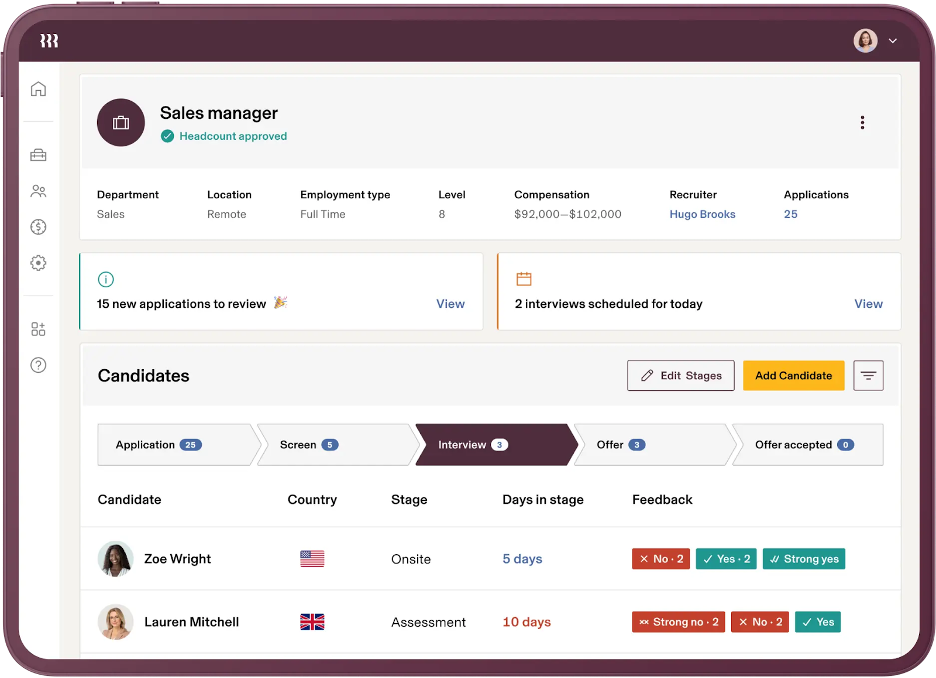
Rippling brings HR, payroll, IT, and device management into a single system. The platform also comes with compliance support for multiple US states and a growing international country. It mostly suited for medium sized business who want to automate or streamline their HR workflow.
Pros
- Automatically detects employee relocation and updates payroll tax setups, state leave rules, and minimum wage requirements.
- It is easy to use as the interface is polished
- The Platform Integrate HR with IT support
- It has an employee self-service portal
Cons
- It is complex during setup, especially when configuring integrations or advanced workflows
- Price increases when you add IT, global payroll, and compliance modules.
4. Gusto
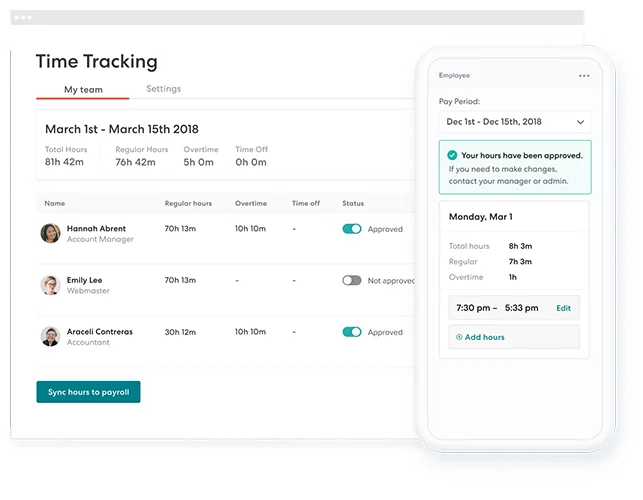
Gusto is a favorite HR Platform among US small businesses for its user-friendly payroll and HR interface. While not a global platform, Gusto offers strong US-centric jurisdiction awareness by registering businesses for multi-state payroll taxes and keeping track of state-by-state compliance requirements.
Pros:
- User-Friendly Interface which iseasy for non-HR professionals to use
- Automatically handles state tax registrations and local payroll tax withholdings
- Higher-tier plans include access to HR experts and state-specific compliance checklists.
Cons:
- Strictly focused on US-based employees and contractors.
- Custom contract and handbook generation features are limited
5. BambooHR
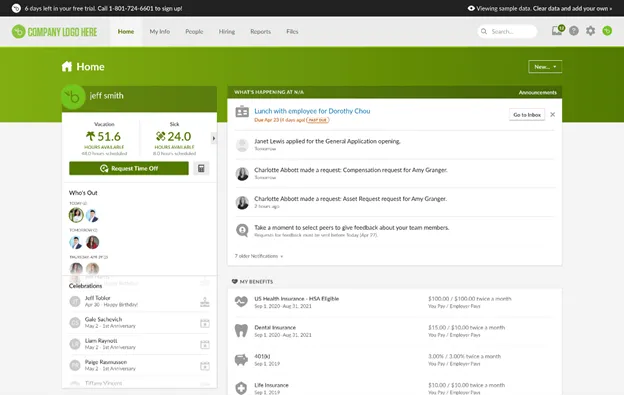
BambooHR is a popular HRIS built for medium size and small businesses. The Platform is powered by its Compliance Intelligence engine (via VirgilHR), BambooHR brings jurisdiction awareness to US state laws with a built-in Multi-State Comparison tool, handbook creation, and automatic labor law change alerts.
Pros:
- Allows HR teams to run side-by-side legal comparisons across all 50 US states for policies like PTO, overtime, and leave.
- Generates and maintains federal and state compliant employee handbooks with automated legal update alerts.
- It has anemployee record, applicant tracking (ATS), onboarding, and e-signatures
Cons:
- Its payroll and primary compliance intelligence features cover US operations;
- Base pricing rises per-employee rates when you add modules like payroll, time-tracking, and advanced performance tools.
Head-to-Head Software Comparison
| Feature / Capability | HRDocket | BambooHR | Deel | Rippling | Gusto |
| Primary Focus | HR Document Generation & Workflows | Core HRIS & Multi-State Compliance Guidance | Global EOR & International Hiring | Unified HR, Payroll & IT Automation | SMB Payroll & Basic HR |
| Jurisdiction Scope | Regional / Multi-Country Document Rules | 50 US States (Global via EOR partners) | 150+ Countries Worldwide | Multi-State US & Growing Global | 50 US States |
| Document Automation | High (Handbooks, NDAs, Letters, PIPs) | Moderate-High (Handbook Builder & State Forms) | Moderate (Standard Global Contracts) | Moderate (Custom E-Sign Templates) | Basic (Standard Forms & Letters) |
| Asset & Property Tracking | Yes (Built-In Serial/Asset Ledger) | Basic (Asset fields, no native IT shipping) | No (Requires Integrations) | High (Full IT Device Shipping/Wiping) | No |
| Best Value For | SMBs needing compliant documentation | Teams wanting clean HR records & US legal guidance | Companies hiring internationally | Mid-market teams needing HR + IT | US SMBs needing easy payroll |
Frequently Asked Questions
What does jurisdiction-aware mean in HR software?
It means the software adapts its rules, documents, payroll, and compliance checks to the specific location where an employee works, whether that is a country, state, or even a city.
Is jurisdiction-aware HR software only for large companies?
Not at all. Small and mid-sized businesses often benefit the most, because they rarely have a dedicated compliance team. Many platforms are priced and designed with smaller teams in mind.
What is an employer of record (EOR)?
An employer of record is a company that legally employs your worker in a country on your behalf, handling payroll, taxes, and compliance locally, while you manage the day-to-day work. It lets you hire abroad without setting up your own legal entity.
Can software guarantee I am compliant?
No. Good software reduces the chance of errors and keeps you current, but you remain responsible for compliance. It is wise to pair it with qualified legal or HR advice.
How much does jurisdiction-aware HR software cost?
It depends on the platform you are using or you adopt for your team. Some Platform charges per head while others charge flat rate.
Final Thoughts
The best jurisdiction-aware HR software is the one that matches your business structure, not the one with the longest feature list. Start with where your employees a are and where they will be next.
Get that right, and you will spend less time worrying about local rules and more time doing what you set out to do: building a team you are proud of.