


After months of searching, you finally found the right candidate. The organization and the candidate are excited. All that stands between you and a signed new employee is getting the offer letter to the new employee.
An offer letter is often the first formal document a candidate receives after passing the selection process. Beyond welcoming a new employee, it serves as a formal agreement that outlines job description, compensation, working conditions, and statutory rights.
However, labor regulations are different across states, provinces, religions, and countries. A standardized template that works in one jurisdiction may leave your organization expose to legal risks in another. Following a structured creation process helps ensure your offer letters remain clear, effective, and legally sound.
To make sure you don’t face legal issues when issuing offer later to new employees, fellow this article.
What an Offer Letter ?
Before you write a single word, it is important to understand the role an offer letter plays in the employment relationship, because misunderstanding this is where most avoidable legal problems begin.
An offer letter is a written summary of the terms under which employment is being offered. It is not an employment contract. That distinction is very important. An employment contract is a binding legal agreement that governs the full employment relationship, termination provisions, specific obligations, terms that can only be changed with both parties’ agreement. An offer letter is more limited, It confirms the core terms and invites the candidate to accept but does not govern the full employment relationship the way a formal contract does.
That said, an offer can cause an avoidable legal battle if the wrong language and structure is used. The primary goal of an offer letter is to confirm terms of employment with creating a legal obligation that the organization do not intend to create.
Writing an offer letter that’s actually legally compliant for your state with HRDocket
To write a legally complaint offer letter with HRDocket you must go through these five steps:
1. Setup Stage
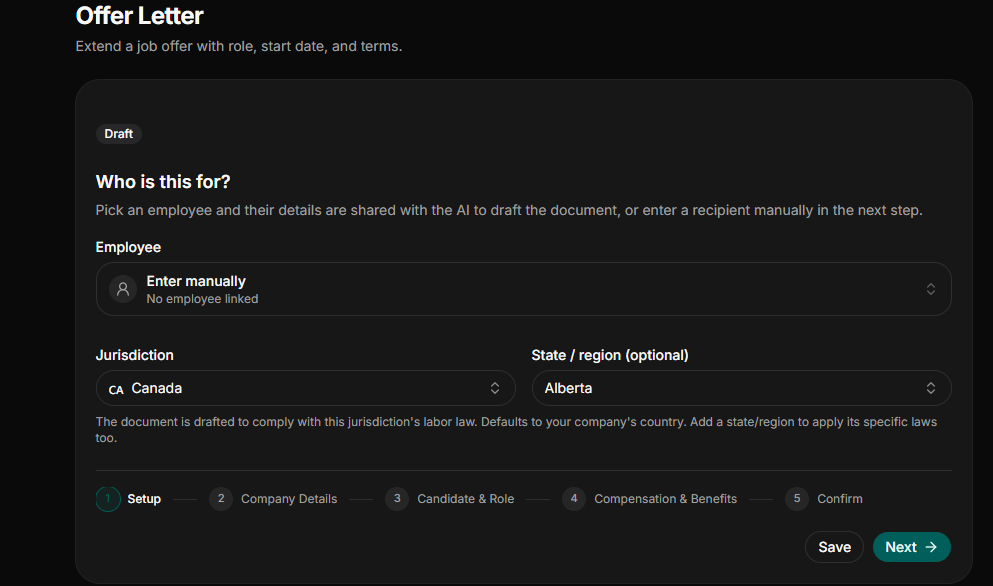
Before you start, if you the employee is already added to the employee database you select the employees name but if he is not add recipient manually in next stage.
At this this stage, you select jurisdiction where the employee will be working from not your head office because labor standard fellows’ employees not where corporate headquarters is located. Once you select the jurisdiction, you select the state, province, religion, the employee is based.
If your company is based in Texas but your employee a remote worker living in Alberta or California, local state or provincial laws govern that relationship.
When you select the right jurisdiction, the platform draft terms that comply with local labor standards such as local overtime rules, statutory holiday entitlements, and mandatory leaves.
2. Company Details
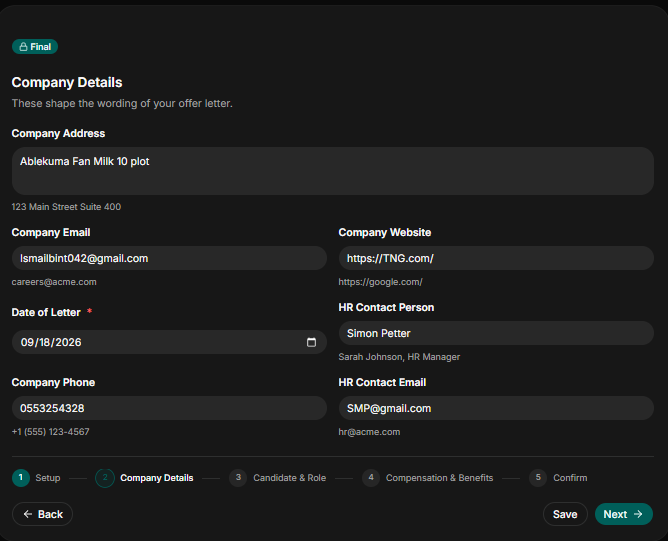
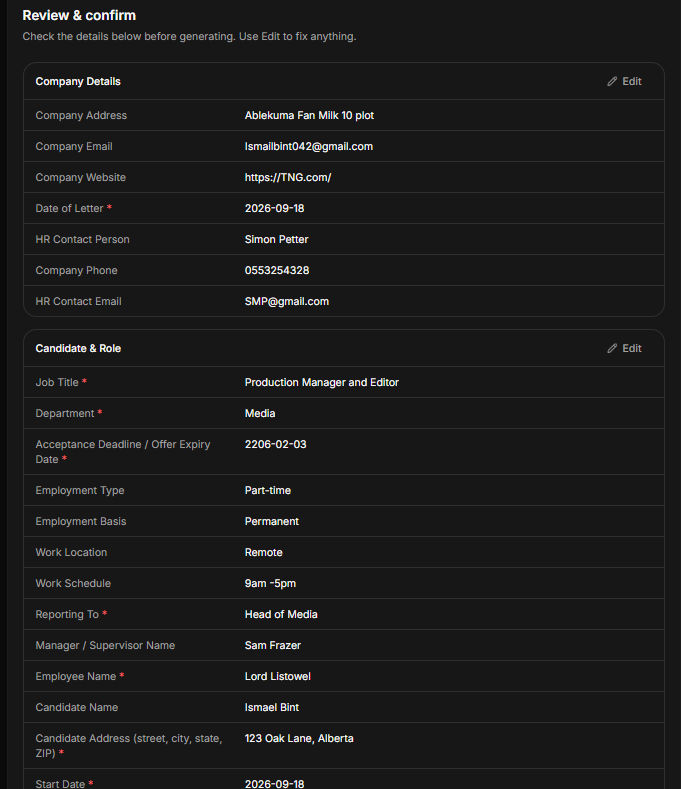
Provide the company address, email address, phone number and website as provided when registration the company. All these details must be the legal registered details not trading name for legal validation purposes.
The HR contact person drafting the letter or the head of HR legal name and official email address must also be provided. Less I forget, the date of the letter must be provided as it one of the mandatory inputs required at this stage.
3. Candidate & Role
At this stage, be clear about what the job is, his or her responsibilities, deadline for acceptance, and who his reporting supervisor or manager is.
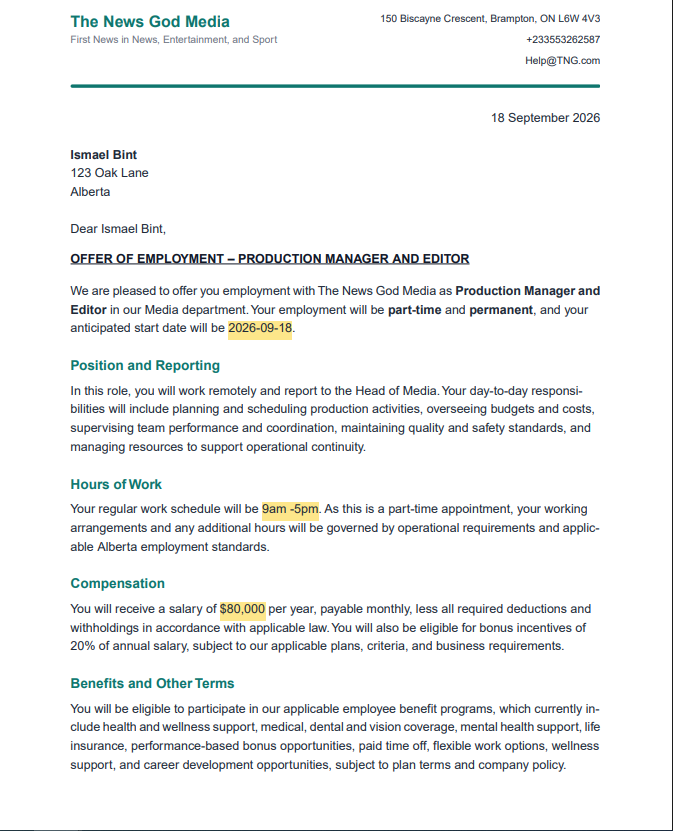
- Job Title & Department: State the formal title (e.g., Production Manager and Editor) and the department (e.g., Media), if the employee is not already added to employee database as started in earlier at the setup stage.
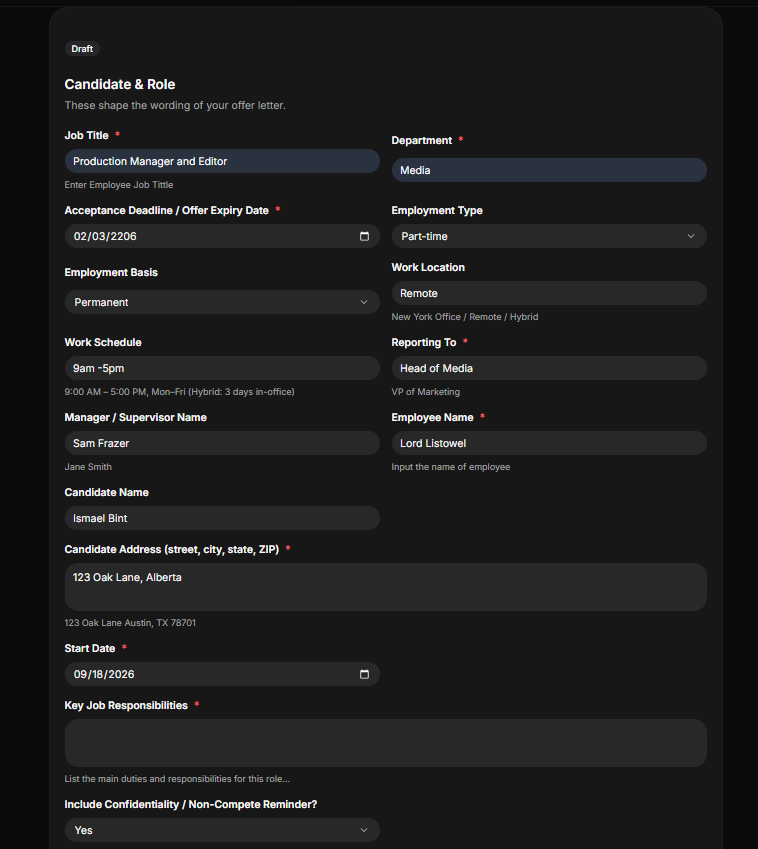
- Employment type: select the employment type whether is Full-time, Part-time, Contract, Intern, Temporary, or Consultant.
- Work Location: Specify whether the position is On-site, Hybrid, or Remote.
- Work Schedule: Specify clearly whether is a 9:00am-5:00pm, Monday to Friday or 9:00am-5:00pm, weekends included.
- Reporting Manager and Manger/ Supervisor: Provide the official or officer the employee will be reporting to. Example, the head of marketing, chief operating officer. The name of his or her direct manager or supervisor must also be provided.
- Candidate Address: list only the street, city, zip to protect privacy and prevent location bias. Example, 742 Evergreen Terrace, Springfield, 62704.
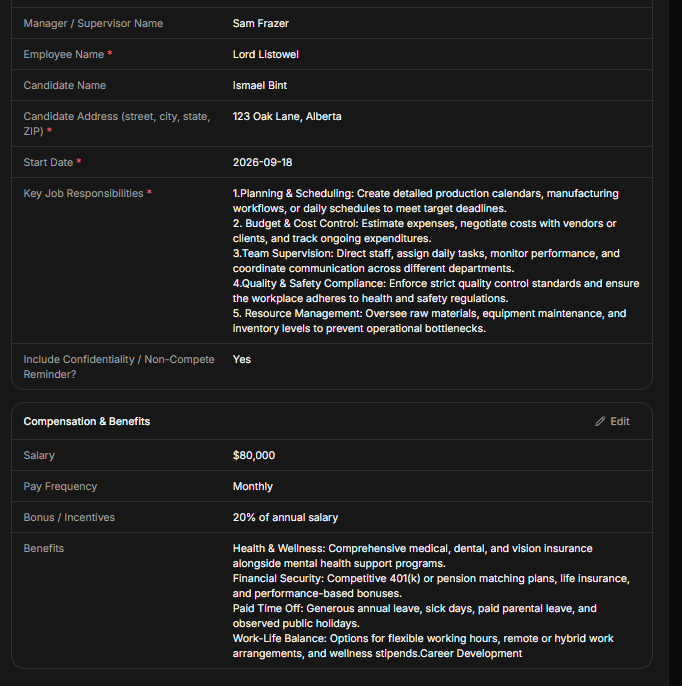
- Key Job Responsibilities: list core duties in 3 to 5 bullet points.
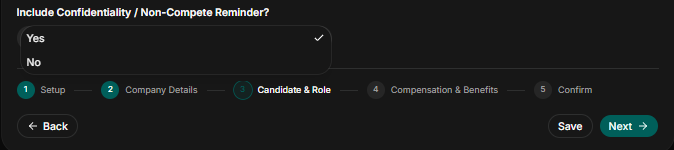
Before you move to the next stage you must choose to include a confidentiality and non-compete agreement in your document.
What does it mean:
- Confidentiality: A rule that keeps your business data, secrets, and private information safe from being shared.
- Non-Compete: A clause that stops a worker or partner from joining or starting a rival business right after leaving.
When to Use It:
- Select “Yes” if you are drafting an employment contract, freelance agreement, or business deal and need legal protection for your proprietary information.
- Select “No” if the document does not require sensitive data protection or if non-compete rules do not apply to your situation.
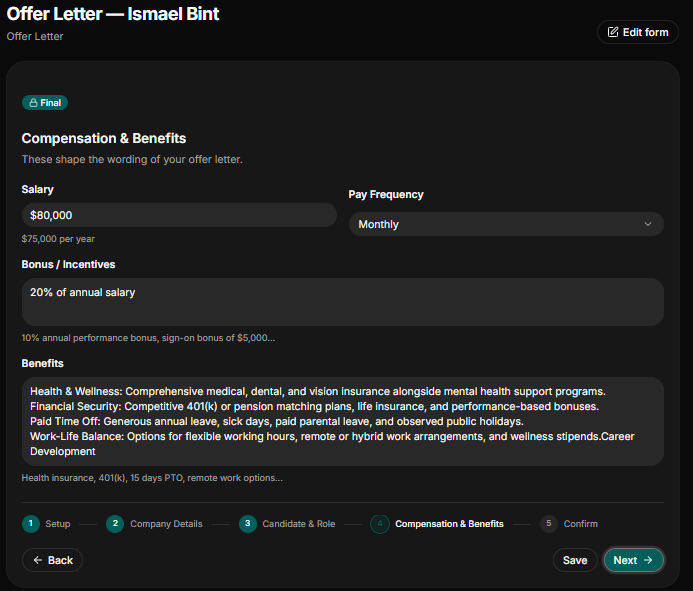
4. Compensation and Benefits
Compensation and benefit details must be precise to prevent misinterpretation and future legal battles. State the annual salary figure correctly, example $80,000. At the pay frequency section, select whether or not the employee will be paid monthly, bi-weekly or semimonthly.
You must boldly and correctly state if the employee is entitled to any bonus/incentive and how will the employee be eligible. Example, 10% of annual salary at the end of the year.
Again, at the same stage, you must indicate or list the benefits the employee is entitles example health, dental, vision, retirement plan and any match, Paid Time Off (PTO), must be stated.
5. Review & confirm
This is the final but the most important stage. Many organizations are facing legal issues because they failed to pay attention to this stage. Thank to the HRDocket, this is a key step before the document goes out.
Before issuing the finalized document to a candidate, conduct a final review check if every detail about the employee, company, and additional informational added are correct. Once you satisfy with every detail and information provided, you save or generate the offer letter.
6. Review And Edit
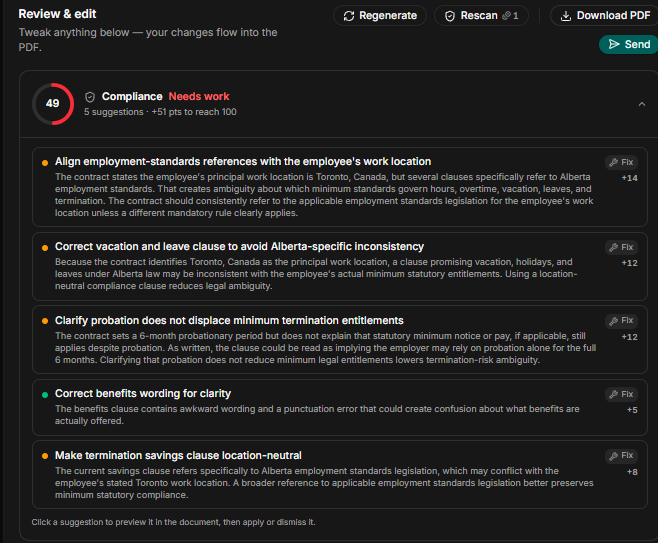
After the final document is generated, you edit the letter to make sure the language and everything is correct. To make sure you don’t miss any small detail that can hurt you in the future you perform risk scan to flag missing conflicting dates, unclear clauses, and jurisdiction-specific gaps.
After editing or adjusting the final draft during review, the Rescan function evaluates your changes before final approval to ensure that you haven’t introduced any compliance gaps. In summary, it acts as a final compliance and legal safety net, ensuring that that your edited version is legally solid and error-free before it is locked
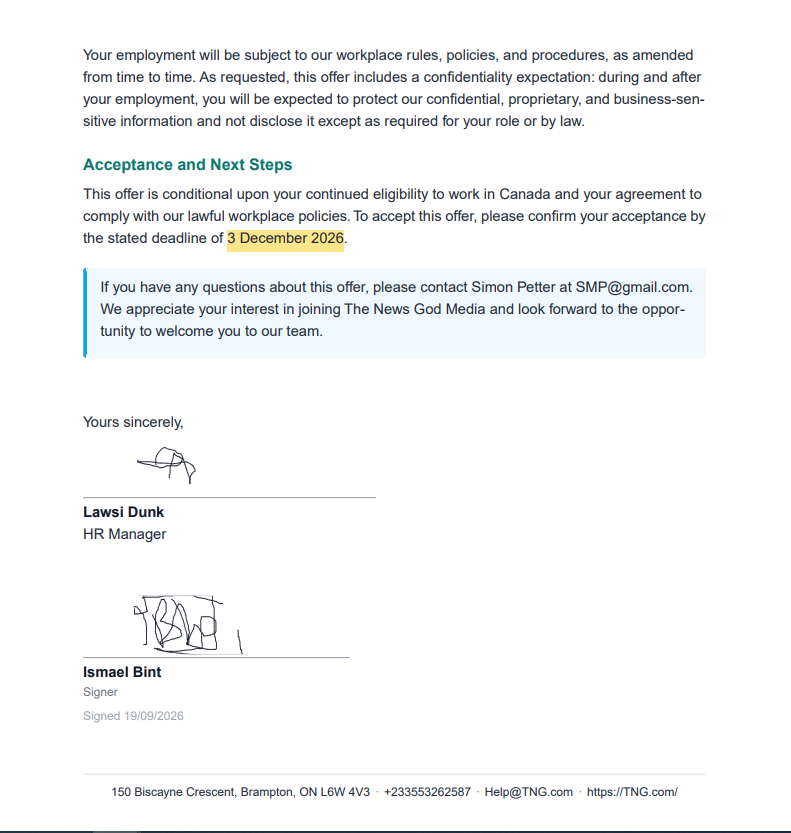
Once you are happy with the letter, it routes for e-signature natively, no exporting to a third-party tool, no downloading and emailing. The signed version files automatically to the employee’s profile in HRDocket’s Employee Records, connected to their record from day one. When you need to generate the employment contract, the onboarding documents, or anything that comes later, the same employee profile carries everything forward.
You can also invite someone to sign by signing an email to the person.
HRDocket is freemium platform, the free plan starts at $0, the starter plan is $19/month, the growth plan is $49/month, and $99/month for unlimited employees on the Business plan. Every paid plan includes the full document generator, digital signatures, and document history.
Conclusion
The offer letter is the first thing a new employee receive from you. Getting it right will not only save you from legal issues but send a message of your organization to the new employee of how the organization operate and works. Choose HRDocket today, to save you from the stress of future legal issues.