Contractor vs. Employee: Protecting Your Business from Expensive Misclassification Errors

Let's talk about a number that rarely comes up in professional business discussions. Not in a good way but the kind that appears after a state tax probe, a labor audit, or a misclassification lawsuit, all because an employee of your business was referred to as a "contractor" while the law saw something quite different.
Try Employee Contract Generator
By this point, the question isn't whether the relationship was structured correctly. It's whether you can prove it. And that proof lives or doesn't live in the documents you created before the work ever started.
This is exactly the kind of operational risk that HR Docket was designed to eliminate. As a modern HR document platform built for people and teams that move fast, HR Docket takes the guesswork out of drafting, reviewing, and executing contractor agreements so your documentation is doing its job long before anyone ever asks to see it.
If you're regularly hiring freelancers or managing a gig-based workforce, what follows is what you need to understand about the misclassification landscape and how getting your paperwork right from the start changes everything.
Why the Contractor vs. Employee Distinction Matters So Much

Here is a frustrating truth you have to hear, “Contractor” isn’t a label you get to assign. However, it’s a legal conclusion that regulators, courts, and tax authorities reach by looking at how the working relationship actually functions not what you call it, and not what the worker agreed to upfront.
The IRS uses a three-factor framework covering behavioral control, financial control, and the type of relationship. The Department of Labor applies an "economic reality" test. A worker can be classified correctly under federal rules and still be considered a de facto employee under state law.
When the classification is against you, the consequences add up quickly. Back payroll taxes, unpaid overtime, retroactive benefits responsibility, workers' compensation claims, unemployment insurance contributions, and civil fines can all add up to more than six figures in a single misclassification case. When you multiply it by a dozen contractors with contradictory documentation, you have a serious existential danger for a small or medium-sized organization.
The aspects that virtually always cause problems in enterprises are the same: arranging the worker's schedule, giving their equipment, mandating exclusivity, integrating them into daily team operations, and allowing engagements to continue forever without formal structure. Any of these, when combined with insufficient or missing documentation, creates the perfect storm for a classification dispute.
What a Real Freelance Contract Is Actually Protecting

A well-built freelance contract is not a formality but an active legal instrument that establishes the nature of the relationship, defines its boundaries, and creates a documented record you can stand behind if the relationship is ever challenged.
The contract itself needs to affirmatively support your position that this person is operating as an independent business, not as an employee without benefits. The elements that matters are:
1. Scope and deliverables over process. The agreement should define what gets delivered, not how it gets done. Any language that gives you control over the worker's method, hours, or workflow signals the kind of behavioral control that regulators associate with employment. You're buying a result, not directing a day.
2. Payment by project or milestone. Regular weekly or bi-weekly payments that mirror a salary are a red flag. Fee structures tied to deliverables or invoicing cycles reinforce the contractor model. The agreement should also make explicit that the worker handles their own tax obligations this is both a legal clarification and a practical protection.
3. The right to subcontract. Independent contractors can typically bring in their own people or delegate work. Including this in the agreement even if the contractor never uses it reinforces that they're running their own operation, not filling a seat on your team.
4. Defined endpoints. Open-ended agreements that renew automatically and stretch across years start to look indistinguishable from employment. Build in natural project conclusions or structured renewal terms that require active re-engagement on both sides.
5. No benefits, no integration language. The contract should be explicit that no employment benefits apply and that the contractor operates independently of your internal management structure. Even the phrasing matters here language that positions the contractor as part of "your team" or subject to your internal policies can work against you.
6. IP ownership and confidentiality: This needs to be unambiguous. Without a clear intellectual property clause, work commissioned and paid for by your company may legally belong to the contractor. Pair this with confidentiality provisions where relevant.
The Gig Worker Agreement That Grows into a Problem
There is a part of this problem that is manageable when you have one or two two contractors, however, when businesses start building out a flexible workforce, the document management piece becomes genuinely complex.
Creating a proper agreement for one gig worker is easy. But when you have fifteen workers with different roles, project types, timelines, and payment structures all managed through emails and shared folders things can quickly become messy. Templates start changing, mistakes slip in, and the documents meant to protect you can end up creating risks instead.
Another problem business often overlook is when short-term work slowly turns into a long-term arrangement. You may hire someone for one project, then extend their contract once, then again. After a while they have been working with you for years, using your Slack, joining team meetings, and acting like part of the company. However, the original contract don’t describes them as a permanent worker rather a temporal independent worker, which no longer matches the reality.
At this stage, the relationship should be reviewed carefully, either the contract needs to be updated to clearly reflect an independent contractor setup, or the company should consider whether the person should officially become an employee. Ignoring the issue and letting it continue without changes can create serious risks for both sides.
The Real Cost of Getting This Wrong
To make this more real, imagine a company that is been working with the same UX researcher as a contractor for three years. Over time, she becomes deeply integrated into the business joins their weekly team meetings, uses company tools, follows company priorities, and work mostly for that one client. Every year, the company sends her a 1099 and assumes everything is fine, without ever reviewing whether the relationship still matches the original contractor agreement.
Then the company goes through budget cuts and lets her go. She files for unemployment, which triggers a state investigation. Suddenly, the situation looks very different. Based on how she actually worked, she appears far more like an employee than an independent contractor and the company's documentation does little to prove otherwise.
The original agreement was vague and outdated. It didn’t clearly define the project scope, explain ownership of intellectual property, or establish her freedom to work with other clients. In other words, the paperwork that was supposed to protect the company no longer reflected reality.
Now the business could be exposed to back taxes, unpaid unemployment insurance, potential benefits claims, and broader investigations into how other contractors were classified. What started as a routine offboarding process can quickly turn into a costly legal and compliance problem.
And this isn’t some rare worst-case scenario. It’s a common pattern in fast-moving companies that hire flexibly but treat contractor agreements as a simple formality instead of a serious risk management tool. That is exactly why businesses need systems and processes that keep documentation accurate, compliant, and aligned with how working relationships actually evolve over time.
How HR Docket Keeps Your Contractor Agreement Airtight
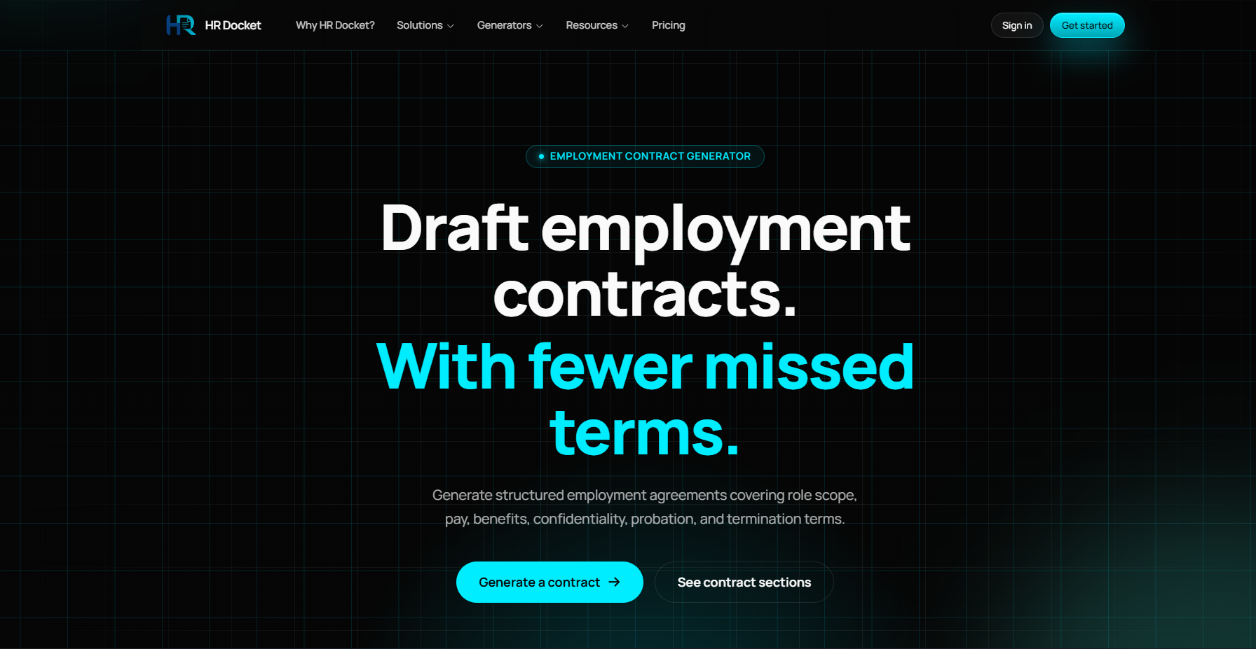
This is the problem HR Docket contract generator was designed to solve. This platform was designed to manage the entire process of creating, reviewing, and signing HR documents, with compliance built into every step.
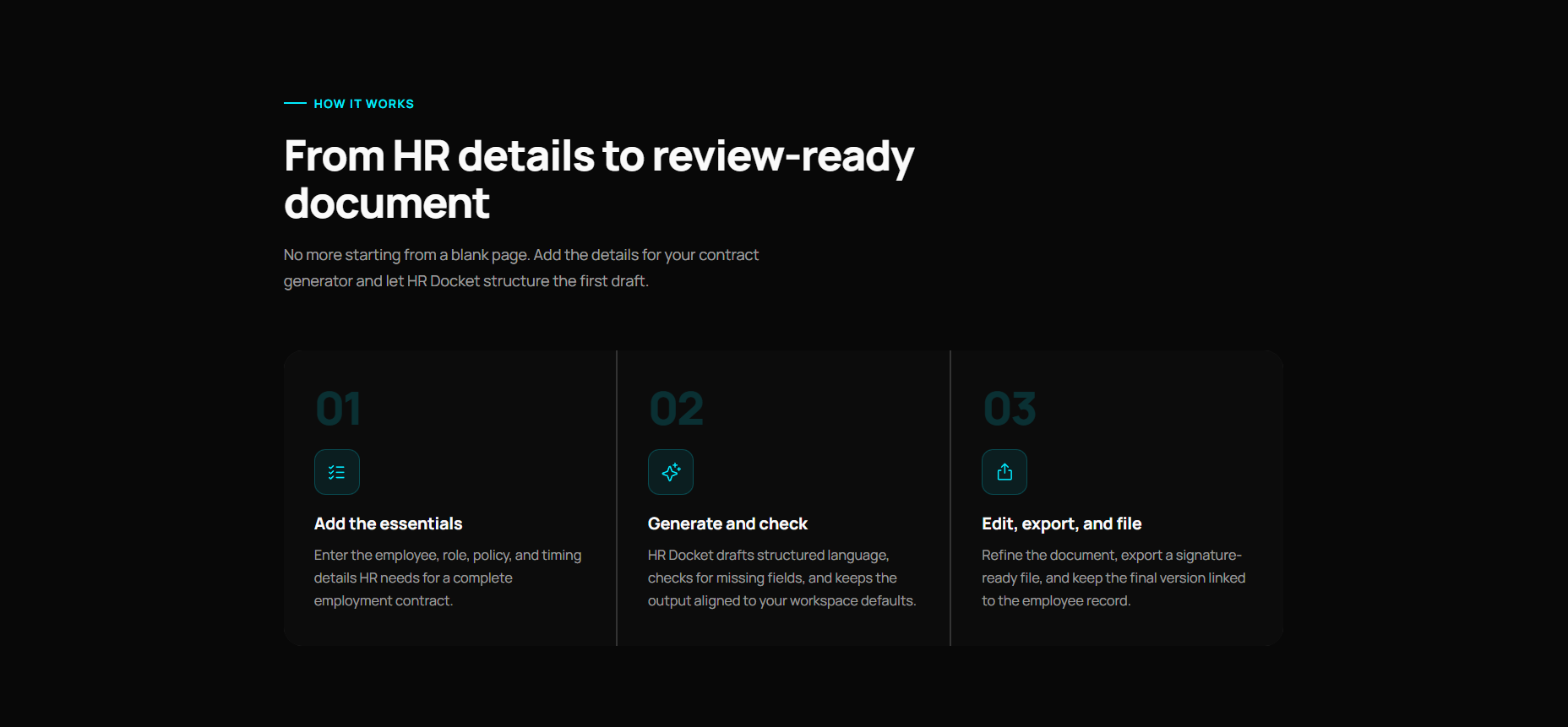
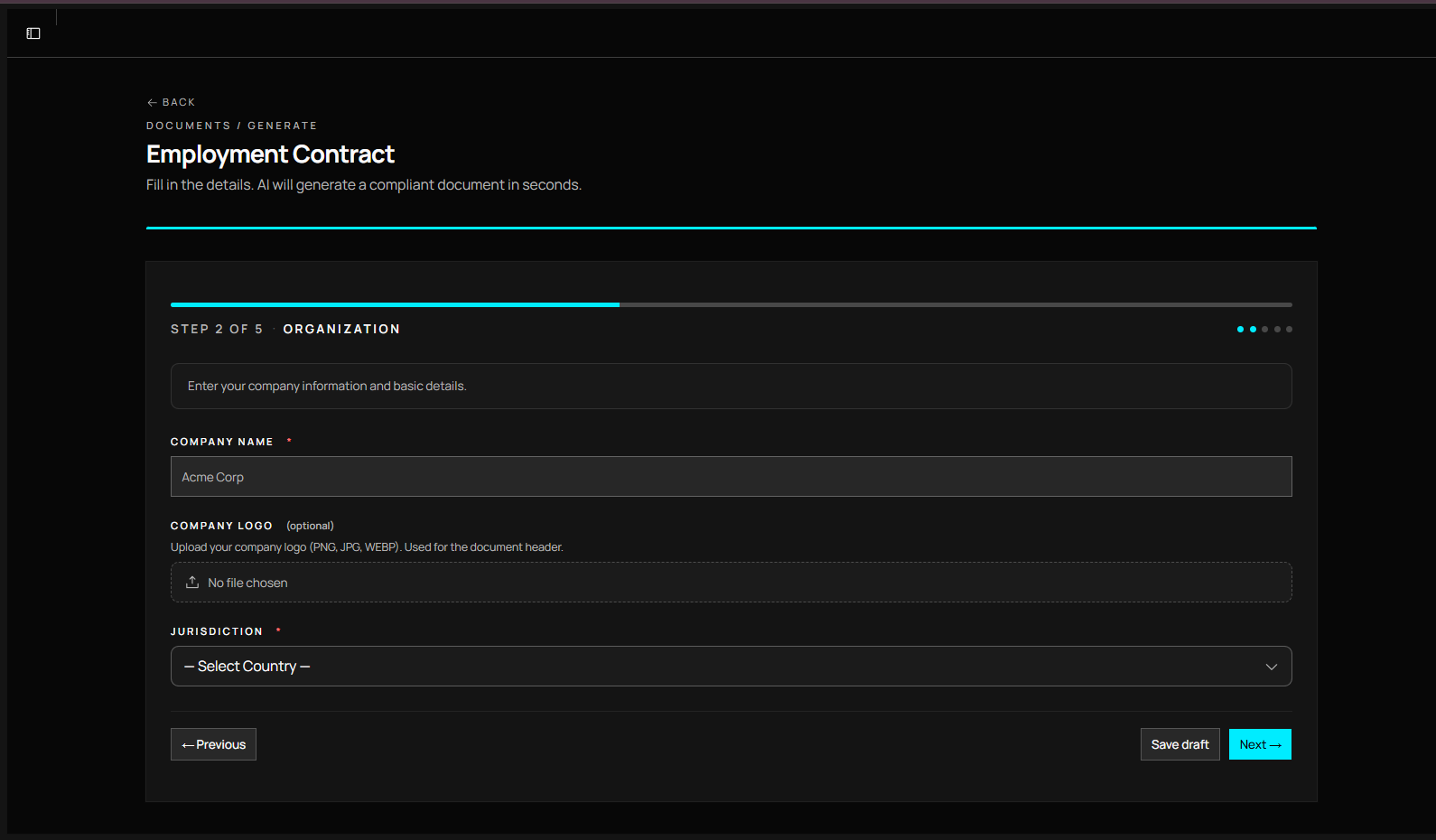
When creating a contractor agreement, HR Docket guides you through the process with simple prompts tailored to your situation. Instead of working from a blank template and guessing what to include, the system helps you create an agreement that matches the actual working relationship including project scope, payment terms, intellectual property rules, and other important legal details.
Before a document is finalized. HR Docket’s review system checks for missing information, inconsistent terms, and policy issues that could create problems later. It acts like a second reviewer, helping you catch mistakes early before they become expensive legal or compliance issues.
For companies that regularly hire contractors, secure reusable templates help maintain consistency. Every agreement is created from an approved, up-to-date version, so teams are not using outdated documents or making unapproved changes to important clauses.
Once the agreement is ready, the platform handles signatures with full tracking, including timestamps, delivery records, and signing status. This creates a clear audit trail that can help prove the legitimacy of a contractor relationship if questions ever arise.
HR Docket also keeps every contractors documents connected to their profile in one organized system, instead of spreading files across emails and folders. Access controls ensure that only authorized people can view sensitive records, while audit logs make it easy to see who reviewed, sent, or signed each document and when they did it.
HR Docket Subscription Plan: Flexible Pricing That Scales With Your Team
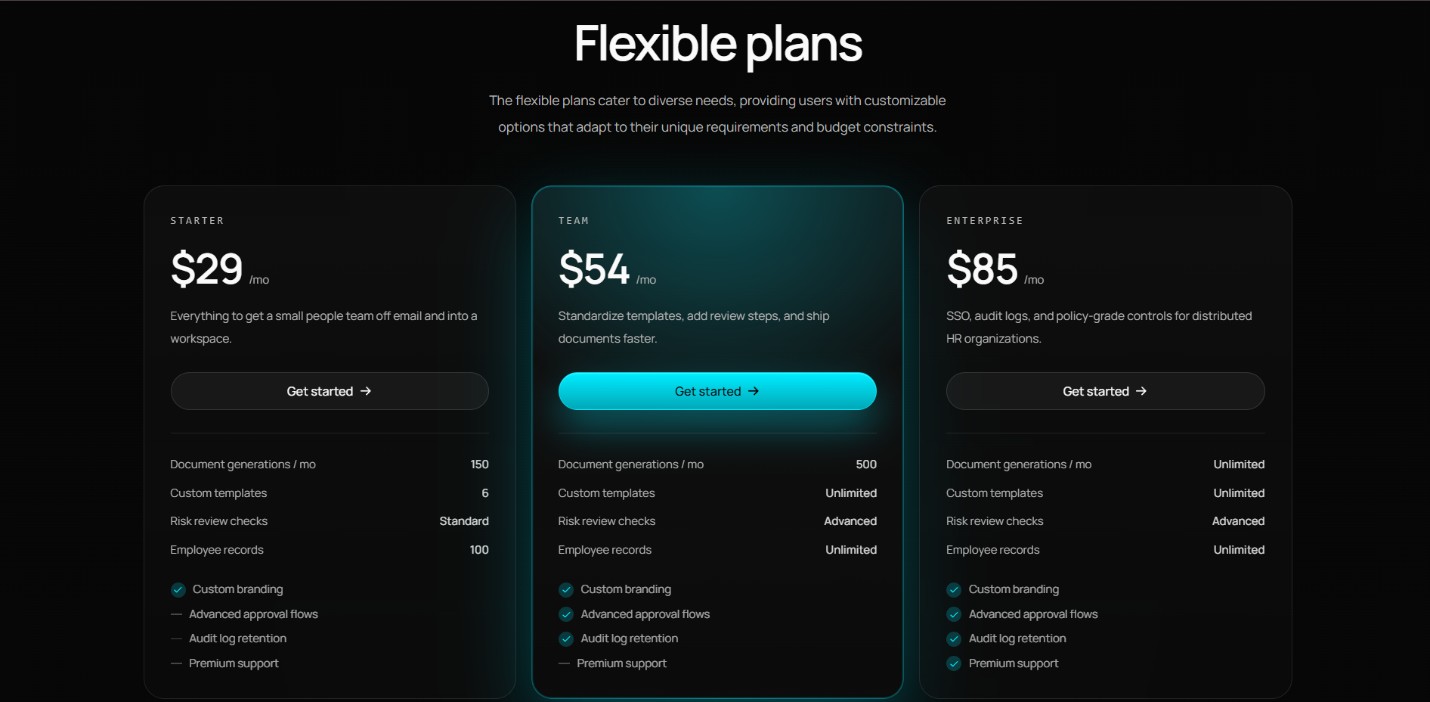
HR Docket uses a simple, scalable pricing model designed to match how businesses actually grow. Instead of forcing companies into oversized enterprise contracts from the start, it lets teams choose a plan that fits their current level of contractor activity and documentation needs.
The Starter plan, at $29 per month, is aimed at small teams and startups that are moving away from manual HR processes. It covers the essentials like basic document generation, a limited set of templates, and standard review checks. This tier helps businesses introduce structure early without adding unnecessary complexity or cost.
The Team plan, priced at $54 per month, is built for growing companies managing multiple contractors across different roles. It expands template usage, improves review and approval workflows, and supports higher document volume. At this stage, many businesses begin standardizing their contractor agreements to ensure consistency across departments.
For larger organizations, the Enterprise plan, at $85 per month, adds advanced controls such as enhanced audit tracking, stronger security features, and deeper workflow oversight. It is designed for teams that need tighter compliance visibility and more structured management of contractor documentation at scale.
Overall, the pricing structure reflects a growth-based approach. As contractor usage increases and documentation becomes more complex, businesses can move up tiers naturally without disrupting existing workflows or overpaying early in their journey.
Building a Contractor Program That Actually Holds Up
The companies that avoid contractor disputes are rarely the ones with the biggest legal departments. More often, they are the businesses that built reliable systems early before contractor management became chaotic.
They treat documentation as part of operational infrastructure, not as paperwork to rush through at the end of onboarding. Agreements are reviewed consistently, contractor relationships are reassessed when responsibilities change, and every signed document is stored in a system the business can actually trust.
That is ultimately where HR Docket’s platform fits into the picture. It helps businesses move faster without sacrificing compliance by bringing drafting, review, approval, signing, and document tracking into one secure workflow. For companies scaling flexible workforces, that kind of structure is no longer optional. It is what keeps short-term contractor flexibility from becoming a long-term legal problem.
By centralising contractor documentation and making updates visible in real time, companies reduce ambiguity that often leads to disputes. Clear audit trails also support faster decision making across HR and legal teams, especially when scaling across multiple regions.
Instead of relying on scattered files or informal communication, teams gain a single source of truth that improves accountability. This structured approach also helps leadership identify risk early, before small inconsistencies grow into costly problems.
Over time, the system builds organizational confidence, ensuring that contractor relationships remain transparent, consistent, and aligned with evolving business goals in dynamic, fast-growing environments. long term sustained success.