How to Handle a Resignation Like a Professional
An employee just resigned, and maybe it was expected; maybe it was not. Either way, the next thirty minutes and what gets put in writing matter more than most…
An employee just resigned, and maybe it was expected; maybe it was not. Either way, the next thirty minutes and what gets put in writing matter more than most people realize.
How an organization responds to a resignation shapes the last chapter of an employee's experience, and the last chapters have a way of defining everything that came before them. A thoughtful, professional exit process shows the organization was a good place to work, even if the ending was someone's choice to leave. A fumbled one, a missed notice confirmation, a vague handover conversation, and an offboarding that feels like the company is just waiting for the person to disappear do the opposite.
The business case is real too. Former employees talk and spread new about their former employers. They become candidates elsewhere, clients, referrals, and even sometime hired again in the future. How you close the loop determines a lot about the version of your company they carry into the next chapter.
Why the resignation acceptance letter matters more than it seems
When managing the emotional dynamics and fallout of a departure, the resignation acceptance letter often gets treated as a formality and something to get done quickly so everyone can move on to the real work.
This costs organizations more than they realize. They fail to recognize the cost because it not in monetary terms.
The acceptance letter is the document that officially acknowledges the resignation, confirms the final working day, and sets the terms for what the notice period looks like. It creates a shared written record of what was agreed upon and what matters if notice expectations become unclear later, if there is a dispute about final pay calculations, or if you need to demonstrate that the departure was voluntary rather than forced.
When done well, it also does something harder to measure: it tells the departing employee that the organization is handling the resignation with the same professionalism they would apply to any other HR moment. That impression travels.
The notice period: where most transitions quietly fall apart
Notice periods exist for good reason. They give the organization time to begin a handover, document institutional knowledge, and prepare for continuity. They give the employee time to wrap up responsibly and leave on terms they feel good about.
In practice, notice period tracking is one of the weakest points in most HR workflows. The resignation comes in verbally or via email, and someone acknowledges it informally. A start date for the replacement is circled on a calendar, and nobody produces a written record that clearly states when notice begins, when the final working day is, and what's expected in between.
Then the ambiguity compounds. The manager thinks the final day is one date. The employee thinks it is another. Payroll is working on a third. HR finds out about the discrepancy in the last week.
A resignation acceptance that explicitly confirms the notice date and the final working day eliminates confusion. It is a simple document, but it creates a single source of truth that the employee, the manager, HR, and payroll can reference. No ambiguity, no awkward last-week conversations, no payroll corrections after the fact.
What an orderly transition should look like on paper
Transition planning is usually handled as part of workflow problems, which include who takes over responsibilities, what needs to be documented, and how you transfer client relationships. However, the documentation layer underneath it is what makes the transition accountable.
A complete resignation and offboarding record should include the following:
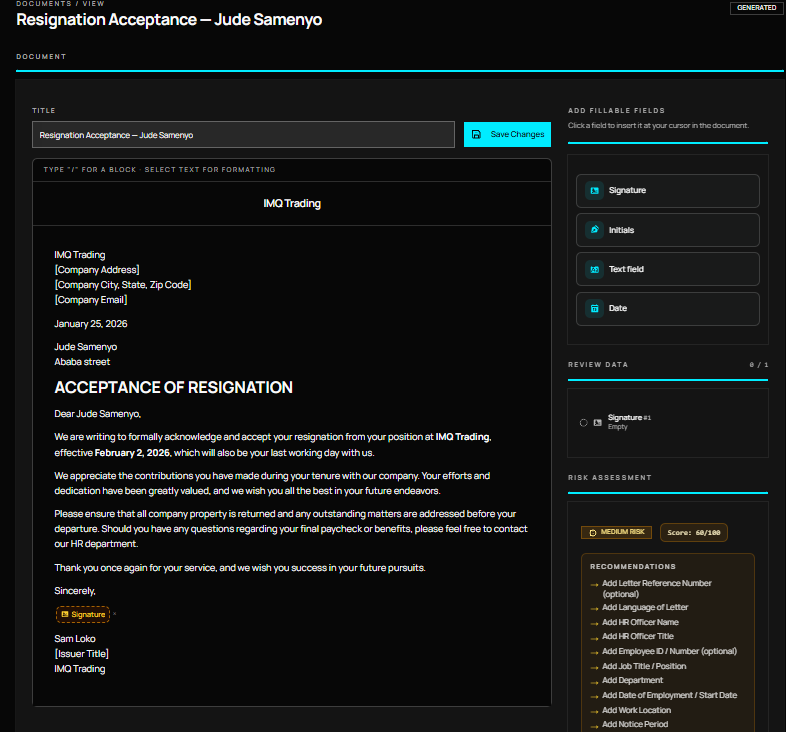
The acceptance letter: It should be dated, addressed to the employee specifically, confirming the resignation, the notice starts date, the final working day, and any transition expectations outlined during the conversation.
Handover documentation: What the employee is expected to complete and every document to hand off before their final day. Vague expectations lead to incomplete handovers, and incomplete handovers become someone else's problem for months.
Equipment and access return: Confirmation of which organizational property needs to be returned and when, what system access will be revoked and on what timeline, and who is responsible for supervising the process.
Record updates: The employee's file needs to reflect the departure date, the nature of the exit, and any relevant notes from the exit process. This is important for reference requests, for benefits and entitlement calculations, and for the integrity of your HR records over time.
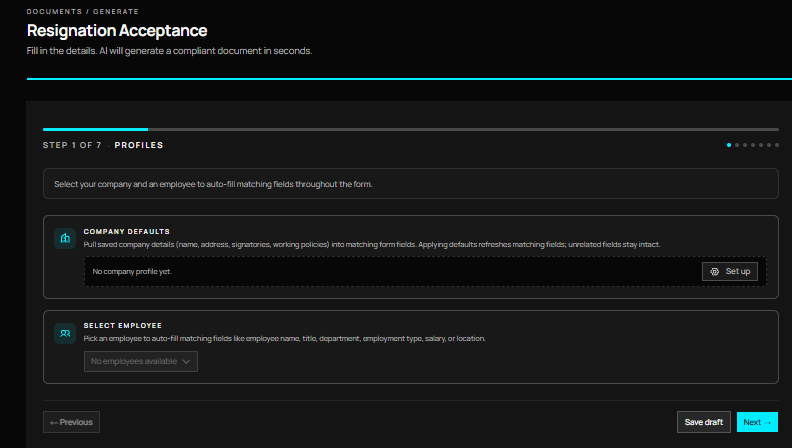
HR Docket's employee-linked records keep all of this organized under a single employee profile, including acceptance letter, saved versions, PDFs, and signature confirmation. This makes the complete offboarding record accessible in one place, not scattered across inboxes and shared drives.
Tone of the letter: the element that determines how they leave.
There is a practical side to resignation documentation and then the human side, and the two are not as separate as they seem.
The tone of an employee exit letter communicates organizational values in a moment, as the person reading it is already forming a final impression. A letter that is warm without being performative and one that genuinely acknowledges the contribution, confirms the logistics professionally, and wishes the person well lands completely differently than one that reads like a legal instrument or a checkbox exercise.
This does not mean the letter needs to be lengthy. In fact, the best resignation acceptance letters are relatively brief: clear on the facts, genuine in tone, and structured in a way that makes the next steps obvious without burying them in corporate language.
What it does mean is that the person drafting the letter should be thinking about the reader, not just the record. Those two goals are not in conflict, as a well-structured document can be both legally sound and humanly decent. But you have to be deliberate about both.
Why consistency is key in handling resignation documents
For organizations with distributed teams and multiple locations, resignation handling is one of the most process-sensitive parts of HR operations and one of the most variable.
When acceptance letters are drafted individually, from memory or from templates that have not been updated in years, the output varies hugely. One departing employee is given a warm, complete letter with clear transition expectations. Another gets a two-line email. A third gets nothing in writing at all.
That inconsistency is not just an employer brand problem. It creates operational risk. Employees in similar roles leaving under similar circumstances should receive similar documentation. When they don't, the differences become questions about fairness, the process, and what the organization actually values.
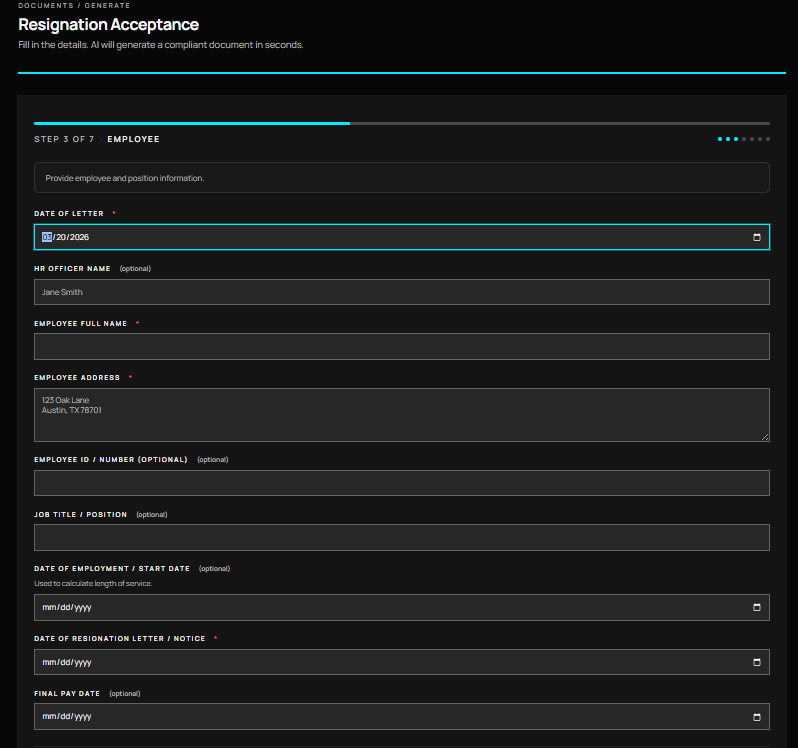
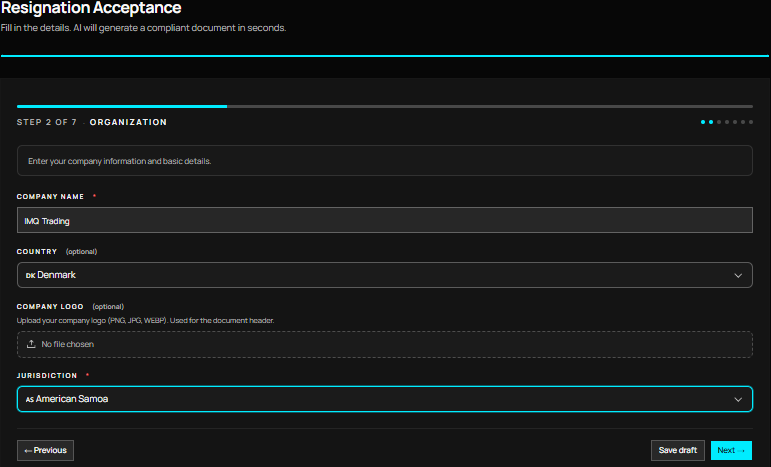
When standardized templates are applied consistently through a guided workflow, close that gap. HR Docket's Resignation Acceptance Letter Generator is built specifically for this purpose, with guided inputs that pull the relevant employee and timing details, approved wording that stays consistent across departments and locations, and a risk review layer that identifies missing fields and unclear dates before anything goes out.
The result is not cookie-cutter correspondence. It is a consistently professional first draft that is refined as needed rather than a blank page that each manager or HR partner fills differently depending on their mood and experience level that day.
What the HR docket risk review identifies that most people miss
Even straightforward documents have failure points. In resignation letters, the most common ones are mundane: a notice date that does not align with the resignation date in the employee record, a final working day that conflicts with payroll's calculation, transition expectations stated vaguely enough to be unenforceable, or a letter that omits the equipment return and access revocation details entirely.
None of these feel catastrophic in the moment. But a notice date discrepancy that nobody identifies until the final week creates exactly the kind of last-minute scramble that stains an otherwise clean exit. A vague handover commitment that is never fulfilled leaves gaps in institutional knowledge that surface three months later when the replacement is trying to understand why something was done a certain way.
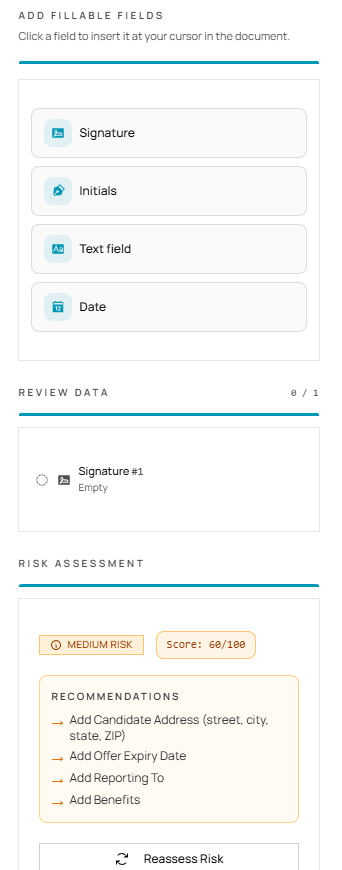
HR Docket's risk-aware review flags these issues before the letter leaves the workspace. It checks for missing required fields, surfaces date inconsistencies, and highlights language that needs clarification, not as a blocking step but as a structured second pass that costs seconds and reveals what gets missed when people are drafting under pressure.
The exit as part of the employee lifecycle, not the end of it
One resignation document shift can change how organizations approach offboarding: the exit is not the end of the relationship. It is a transition point.
Former employees become alumni. They refer candidates. They return as clients or partners. They write reviews on employer platforms that future candidates read before deciding whether to apply. Sometimes people who left for a better opportunity return years later with more experience.
The organizations that understand this invest in clean, professional exits not because it is required but because it's good strategy. The resignation acceptance letter, the notice period management, and the structured handover are not just compliance steps. They are the last impression the company makes on someone who's about to go out into the world and either recommend it or not.
That impression is worth getting right.
Putting the workflow together is the best way to stay consistent
The practical path to consistent, professional resignation handling is not complicated. It requires a reliable workflow. The workflow that handles resignation documents should look something like this:
The resignation arrives. HR confirms receipt and begins the acceptance letter, entering the notice date, final working day, and transition expectations into a structured workflow. The resignation acceptance letter generator drafts the first version; the risk review checks it for completeness; and the final document goes to the employee within one business day, signed, filed, and linked to their employee record.
The notice period is tracked from the confirmed date. Transition expectations are documented and referenced in the regular check-ins between manager and employee through the notice period. Organizational properties and access return items are noted and followed up on before the final day. The employee record is updated on departure.
The whole process takes less time than most organizations currently spend on ad hoc resignation handling. And the outcome is a clean, professional, and documented offboarding.
The Professional Way to Close the Loop
You don’t have to be a lawyer to manage a resignation professionally. You just need the best tools to handle the process of creating a problem with your former employees.
The HR Docket Resignation Generator is built for this purpose and to take the administrative weight off your shoulders. They don't just generate the document, but they provide the following:
Standardized Templates: Ensuring every resignation is handled with the same level of consistency in accordance with the employment law of the jurisdiction you reside in.
Checklists: Guide you through the final days, from handover notes to access revocation without missing anything.
Professional Language: Draft all the necessary letters and confirmations so you never have to guess the right tone.
By using a system that handles the disciplinary recordkeeping and exit documentation, you free yourself to do what actually matters: having a meaningful conversation with the departing employee and supporting your team.
Conclusion: Leaving on a High Note
Resignations are inevitable in any organization, but how you handle them in the room and on paper says a lot about your organization.
A professional exit process, anchored by a clear and complete resignation acceptance letter, protects the organization operationally, supports the departing employee practically, and signals to everyone watching that this organization is a place that takes its employees seriously on the way in and on the way out.
If your current offboarding workflow relies on informal acknowledgment and ad hoc documentation, then that needs fixing. HR Docket makes it straightforward with guided drafting, risk-aware review, and employee-linked records so every exit is handled with the consistency and care it deserves.
Don’t let a resignation turn into drama. Handle it with the same professionalism you brought to the hiring process.